
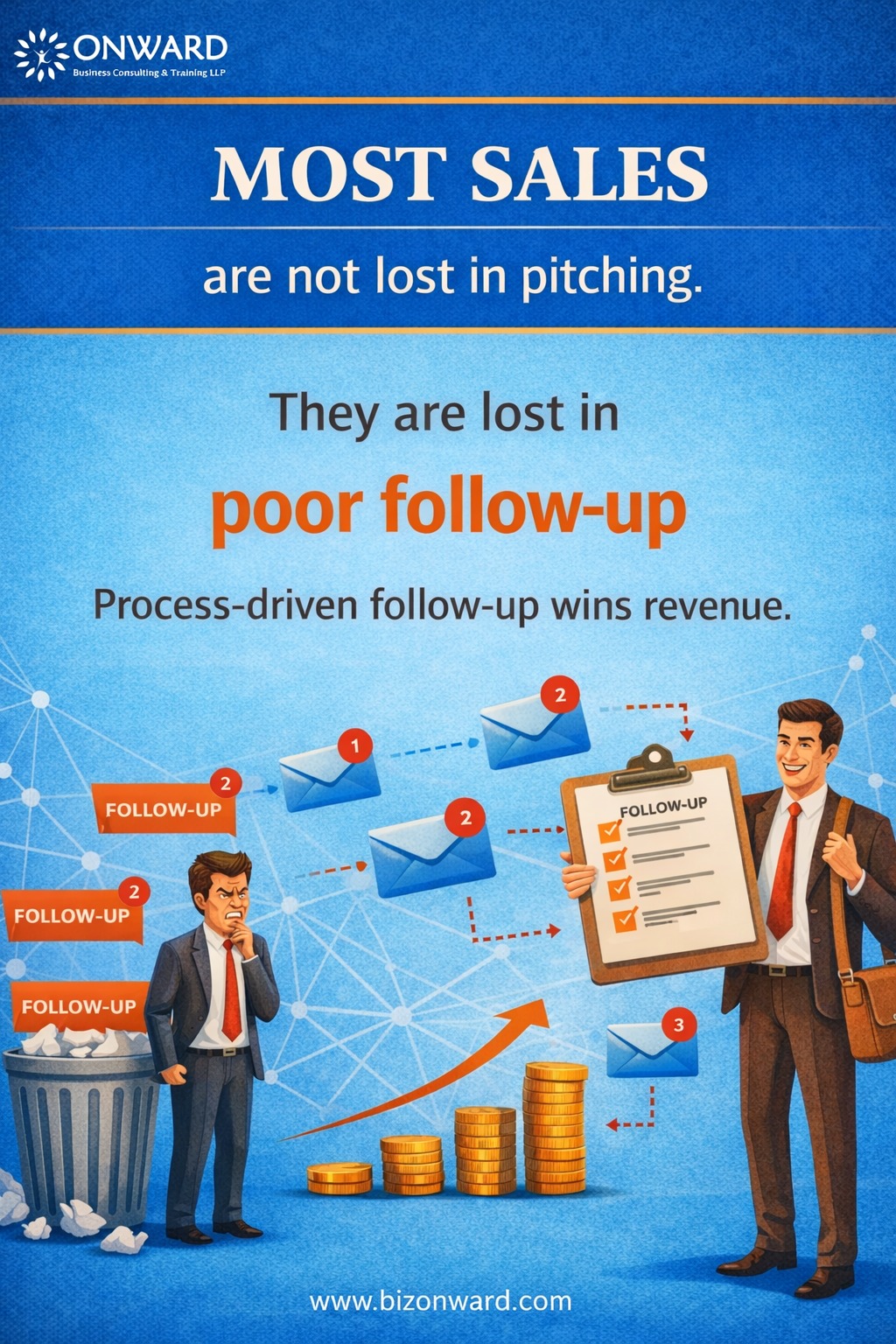
Many organizations believe sales are lost because the pitch was weak. In reality, most deals fail due to poor or inconsistent follow-up. Initial interest from prospects often fades when communication stops or becomes irregular.
A strong sales pitch may open the door, but disciplined follow-up moves the conversation forward. Prospects need reminders, clarifications, comparisons, and reassurance before making a decision. Without structured follow-up, even highly interested leads gradually disengage.
Process-driven follow-up ensures that no opportunity is neglected. Clear timelines, scheduled check-ins, documented communication, and systematic tracking help sales teams stay connected with prospects. When follow-up becomes a defined process rather than a random activity, conversion rates improve significantly.
Organizations that build structured follow-up systems create consistency in their sales pipeline. Sales teams spend less time chasing lost leads and more time nurturing real opportunities.
Revenue growth rarely depends on one powerful pitch. It depends on persistent, professional, and process-driven follow-up that keeps prospects engaged until the decision is made.