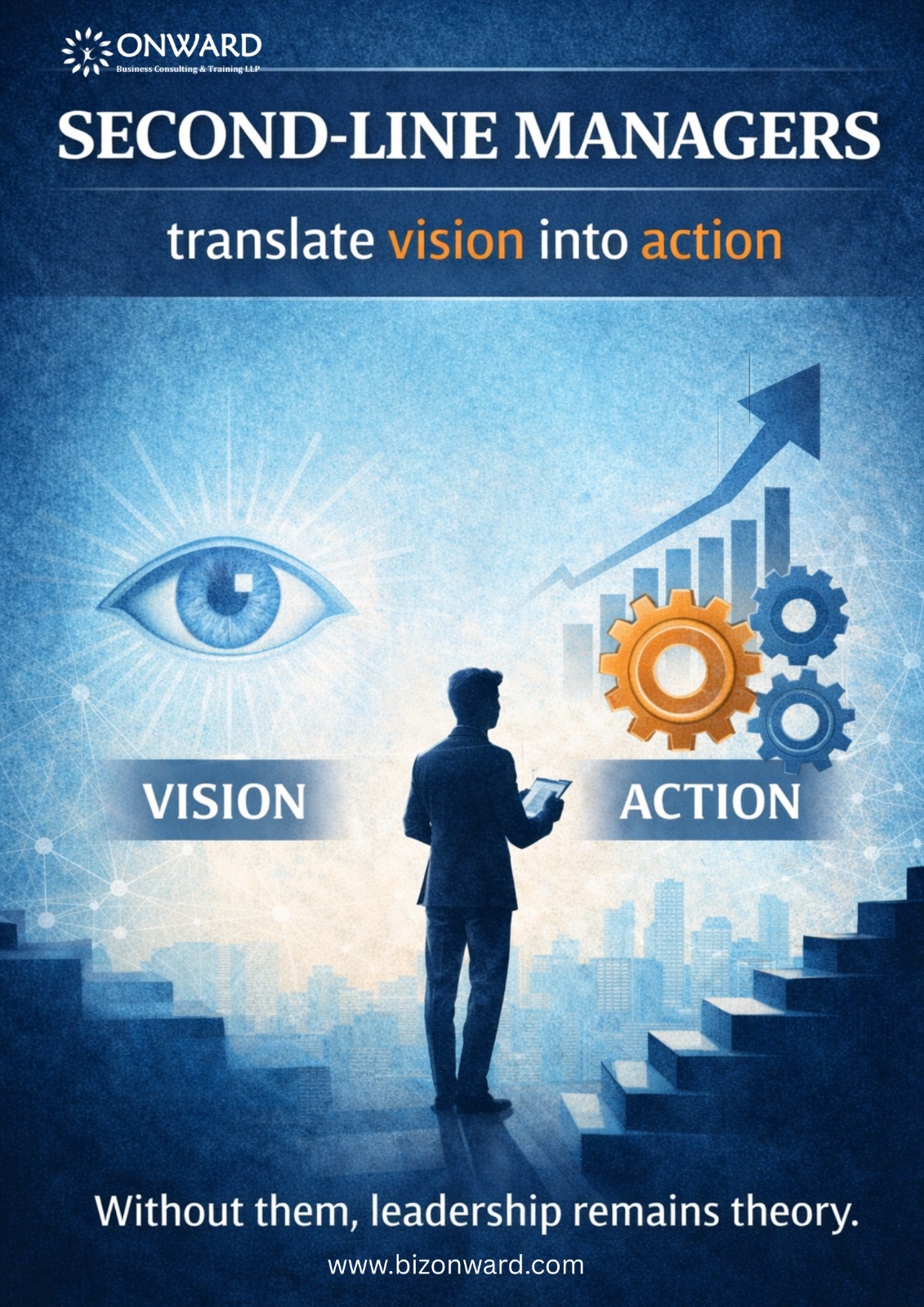
Senior leadership defines direction. Frontline teams execute tasks. But it is second-line managers who connect the two. They translate strategic vision into daily action.
Second-line managers interpret organizational goals and convert them into practical plans, clear priorities, and measurable targets. They ensure that what leaders intend is what teams actually do. Without this translation layer, strategy remains abstract and execution becomes fragmented.
These managers play a critical role in aligning people, processes, and performance. They coach supervisors, monitor execution, resolve operational barriers, and reinforce standards. Their decisions shape how consistently strategy is applied across the organization.
When second-line managers are strong, momentum builds. Teams understand expectations. Accountability improves. Results become predictable.
When this layer is weak, leadership messages lose clarity, priorities conflict, and execution suffers. Vision exists, but action does not follow.
Organizations that invest in developing second-line managers strengthen the backbone of execution. They move beyond strategy documents to real, sustained performance.
Without second-line managers, leadership remains theory. With them, vision becomes reality.